

As observed in ancient times, the concept of a mile is also used to describe or translate a wide range of units that were derived from the Roman mile, the nautical mile.
Miles and yards are the units of measurement commonly used while calculating and measuring the area of a given place.
Just so you don’t assume or guess wrongly, we have taken the time to answer the question of how many yards are in a mile and give a logical explanation as to why it is so.
Read on.
Similar Posts
- What Is the Difference Between a Budget and a Standard
- How to Change American Express Card Name
- how-old-do-you-have-to-be-to-use-fiver
- Will Insurance Pay for a Condemned House?
- Camping in the Desert | How to Survive
- How Much Does a Typical Wedding Cost
- Top 12 Best Paying Jobs in Real Estate Investment Trusts 2026
How Many Yards Are in a Mile

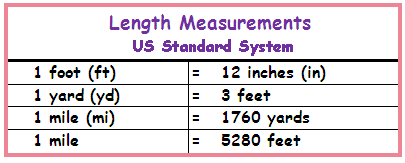
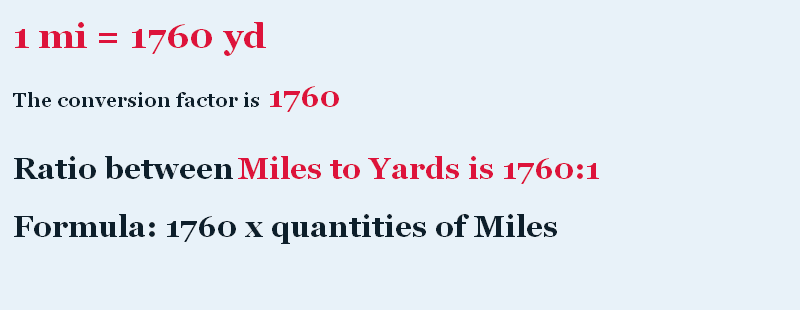
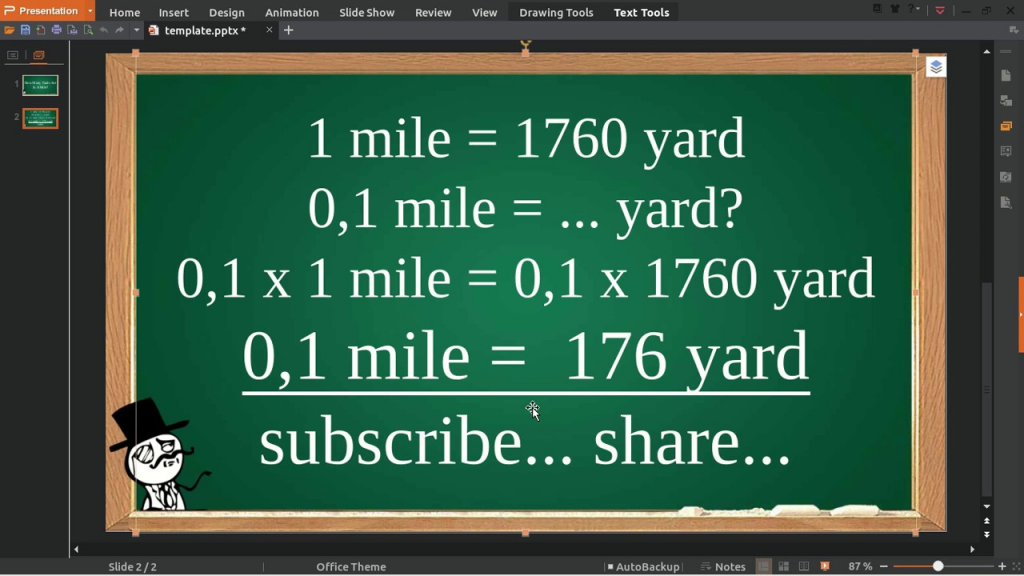
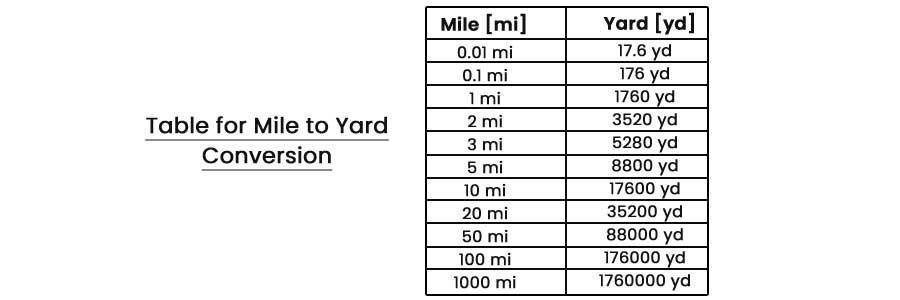
There are 1760 yards in a mile, meaning that 1 mile is 1760 yards.
Explanation:
Miles and yards are the units of measurement commonly used while calculating and measuring the area of a given place.
The conversion factor for converting miles to yards is 1 mile = 1760 yards.
You can also use this easy and accurate metric conversion calculator to convert the given quantity from yards to miles in seconds.
Therefore, we can say 1 mile is accurately equal to 1760 yards.
According to generally accepted customs and traditions
- English Statue Mile is 1,760 Yards
- Roman Mile is 1,620 Yards
- Nautical Mile is 2,025 Yards
- Scottish Mile is 1,976 Yards
- Irish Mile is 2,240 Yards
Further Explanation
One thousand seven hundred sixty yards is a mile because they are 3 feet in a yard, and 5280 is the important figure here.
It could be said that the numbers for imperial measurements are ‘pseudo-random’, and that’s utterly incorrect.
The numbers may seem random if you’ve grown up in a decimal world, but they aren’t.
They are older systems, but that doesn’t mean the people who created them just plucked the numbers out of the air.
The figures were logically thought out; it’s only because you’ve grown up with base 10 that you can’t see the benefits of base 12.
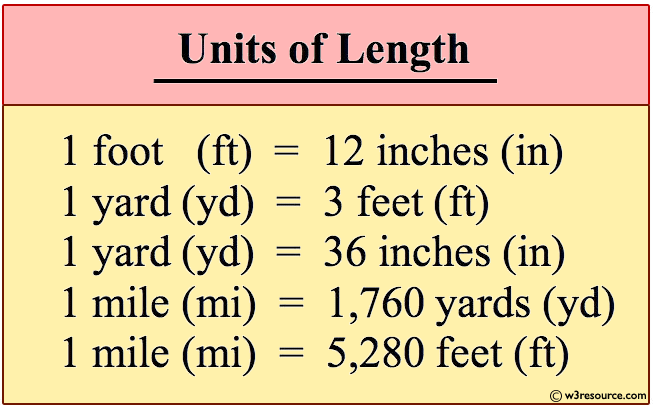
So – Why 5280 feet exactly? Because, like most of the common imperial measurements, it divides neatly into many common divisors.
That’s how they were designed to work, and that’s how the numbers were arrived at. 5280 divides exactly by 2, 3, 4, 5, 6, 8, 10, and 12.
That means that as someone with no calculator and only basic knowledge of mathematics, you can easily calculate half a mile, or a third, or a fifth, or a twelfth.
This is a vast benefit if you think about it for longer than two minutes. Whole numbers of yards (or inches or minutes; our time uses this system, too) are much easier to think in than long strings of decimal places.
How far is a third of a kilometer? 333.333333333333m. If you need to mark out that exact distance, that’s quite hard.
But how far is a third of a mile? 1760 feet exactly. It’s the same on a small scale; a third of a foot is 4 inches, and a third of a meter is 33.333cm.
Also, because these figures are the whole number, you can easily add weird combinations together. What is a third of a mile plus an eighth of a mile? 1760 + 660 = 2420 feet.
It’s hard to understand just how valuable this capability is to people who’ve been fairly well educated and brought out to think that decimal measurements are just ‘correct’ and so easy to work with.
The imperial system is designed for people with minimal schooling who have to think about day-to-day physical objects in the real world that are not easily divisible into very small fractions.
We work vastly better thinking in whole numbers, and we can handle much more complex mathematics when working from simple whole numbers.
The overall argument, in truth, is the argument of decimal (base 10) vs. duodecimal (base 12).
While most of us feel that decimal is just the obvious and natural choice, it’s completely arbitrary.
It makes no difference; it’s simply a matter of preference.
Base 12 is much easier for normal people handling small numbers but far less ideal for anyone working in large numbers.
In science, where we are talking about huge or tiny numbers, decimal helps us think about things because something like 8∗1098∗109 gives a round number, whereas, in base 12, it doesn’t.
That’s why we changed to decimal stuff for many things and why scientists in the US use meters and kilograms.
Now that most people are more educated and learn about exponents and algebra at school, it’s much less of a big deal for things to be easily divisible.
We also have much more accurate measuring and weighing equipment capable of diving physical objects into very accurate amounts; it’s machined, cutting our cloth, steel, and most things.
It’s not that big a deal now, and when you teach kids to think in base 10, they handle it fine.
But it’s important to note that other places still work in base 12 and teach their kids that way.
You can even count on your fingers in base 12 (you count on the segments on your fingers)!
Notably, we still use base 12 times because it’s something everyone uses daily, and those simple divisors help a lot.
For example, it’s so helpful for a quarter of an hour to be a whole number of minutes.
It’s hugely important never to assume that things created in the past must be bad simply because we don’t use them anymore.
Like today, those formulating standard units thought about how that system would be used.
The imperial system suffers from some ‘design by committee’ problems where many parts of the system work in different ways because it was the culmination of lots of less formal systems being slowly standardized over a long period, and that’s where much of the confusion comes from.
Some work on 12, some on 14 or 16 some on 24.
There are lots of weird and seldom-used units, too, like chains and furlongs, that aren’t integral to the system but get dredged up to illustrate how silly it all is.
What is a ‘quarter’? It was 28 pounds. Why? Because that is a quarter of a hundredweight. Obviously.
Don’t presume that imperial units are stupid just because you weren’t brought up to use them.
There are reasons for them, and while maybe we’ve grown past the point where those reasons are all that big of a deal to us, they served their purpose well for a long time.
The fact that you can build battleships and fighter planes (as Britain and the US did) of the imperial system illustrates that these systems are just as accurate and effective.
They are much less suited to a computerized, technologically focused world, but they aren’t random or wrong; they are just made for a different time.
Conclusion
Certainly, 1760 yards make a mile; said differently, 1 mile is 1760 yards.
For more conversion questions, leave them via the comment box below, and we will respond.